I did not plan for my return to regular blogging to involve reverse-proxying language models, stress-testing Arabic prompts at odd hours, and researching a webcam for a possible podcast setup. But that has been the shape of my recent evenings.
What started as casual curiosity quickly turned into a proper rabbit hole. One night I would be comparing model behavior across providers. The next I would be watching Arabic phrasing fall apart in ways that English-first demos never reveal. Then, somehow, I found myself experimenting with AI-generated audio conversations and wondering whether this whole thing might evolve into a podcast or video series.
This is not a grand theory of AI. It is a field report from the workbench.
Why I Built a Private Front Door to AI
I rarely enjoy being trapped inside somebody else’s polished interface for long. The moment a tool starts to matter to me, I want a layer between me and the vendor. I want to swap models without changing my habits. I want cleaner logs. I want control over prompts, routing, and how much of my own data I am casually handing over.
That instinct is what pushed me to build a private AI proxy.
The proxy became my own front door to multiple models. Instead of bouncing between separate dashboards and product decisions, I could standardize the way I work: same workflow, different engines behind it. That alone was useful. More importantly, it made the tradeoffs visible. Latency differences became obvious. Provider quirks became obvious. Even my own prompting habits became easier to inspect once everything passed through one place.
There is also a privacy argument here, and for me it is not theoretical. If I am experimenting with notes, drafts, internal ideas, or client-adjacent thinking, I want a tighter grip on what leaves my machine and why. A proxy is not magic, but it is a meaningful step away from blind trust.
Arabic Is Still Where the Shine Wears Off
If you really want to test whether an LLM is merely polished or genuinely capable, stop feeding it pristine English.
Arabic is still one of the clearest stress tests I know.
Most frontier models can produce impressive English at first glance. They sound fluent, fast, and confident. But once I move into Arabic, especially when the phrasing becomes culturally grounded or slightly idiomatic, the cracks start to show. Sometimes the output is grammatically acceptable but emotionally wrong. Sometimes it sounds translated rather than written. Sometimes it drifts into stiff Modern Standard Arabic when the prompt clearly calls for something more human and contemporary.
That gap matters. It matters for content, for support systems, for research, and for any serious attempt to build useful tools for this region. It is one reason I keep returning to Arabic evaluation instead of being dazzled by benchmark headlines. I wrote earlier about language nuance from a narrower analytical angle in Understanding Arabic Sentiment Analysis, and modern LLMs have only reinforced that lesson for me: multilingual competence is not a box you tick once and declare solved.
To be fair, progress is real. With careful prompts, clear context, and tightly scoped tasks, I can now get results that are materially better than what we had even a short while ago. But if you work in Arabic long enough, you learn to distinguish between fluent-looking output and trustworthy output. They are not the same thing.
Why This Drifted Toward Podcasting
The funny thing about technical experiments is that they rarely stay in their original lane.
Once I had these models in my orbit, I stopped thinking only about text. I started thinking about voice, pacing, presence, and how ideas land differently when they are spoken instead of read. Blogging will always feel native to me, but audio has a kind of immediacy that writing does not. A voice can carry hesitation, warmth, irony, and conviction in a way that even good prose sometimes cannot.
That curiosity is what pushed me toward podcasting, or at least toward building the option seriously enough to test it.
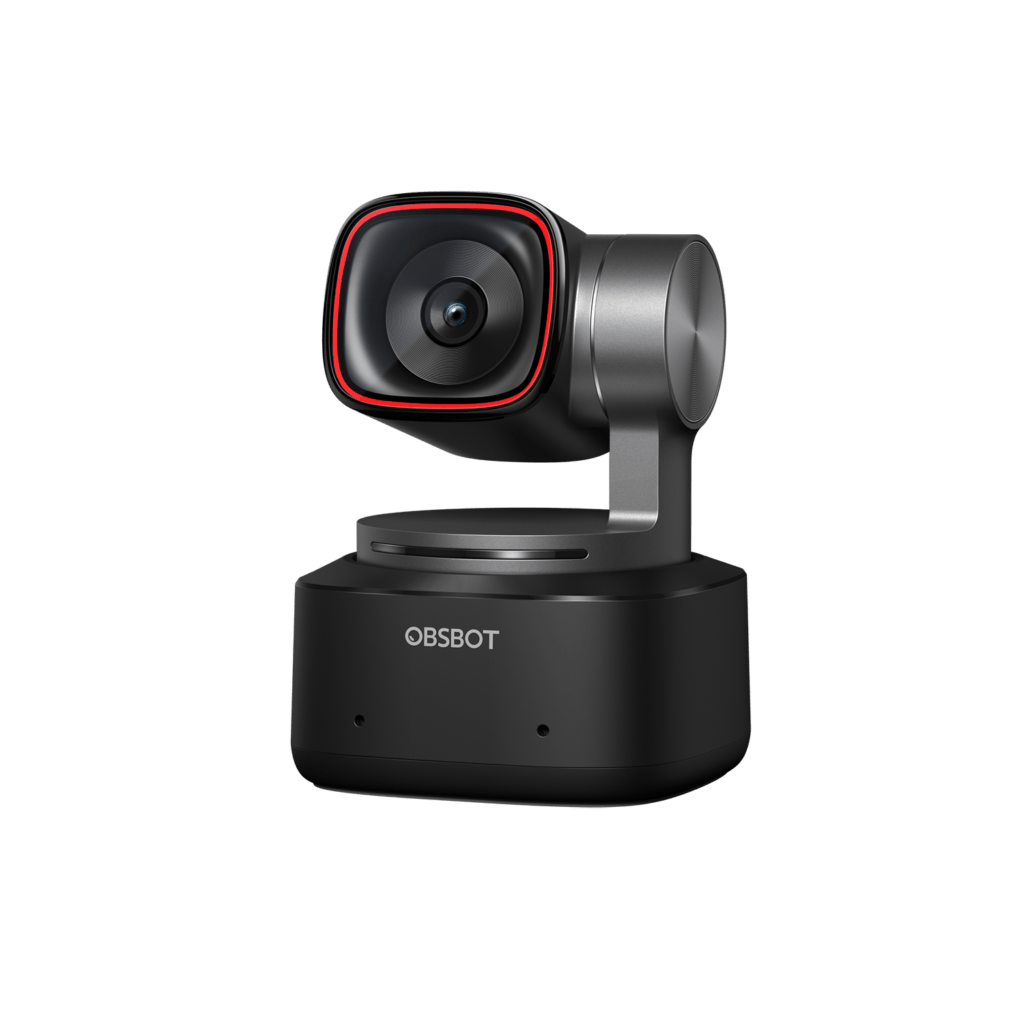
On the gear side, I ended up choosing the OBSBOT Tiny 2. I liked it for very practical reasons. It is compact, it tracks well, and it lowers the friction of sitting down and recording. That matters more to me than studio theatrics. I do not need my desk to look like a YouTube set. I need equipment that quietly gets out of the way so I can think out loud.
Letting AI Stage a Conversation
Then came the slightly strange experiment.
I started testing whether AI could help simulate a conversation between two people by working from transcripts, tone, and synthesized voices. Not as a replacement for real dialogue, and definitely not as a substitute for actual human chemistry, but as a way to explore format. What happens if you give a model source material from two speakers, ask it to preserve the core ideas, and then render something listenable from that structure?
The answer, at least right now, is: promising, awkward, and occasionally fascinating.
You can hear the limitations immediately. The timing is too clean. The interruptions are too polite. The rhythm of real conversation is still hard to fake. Human speech is messy in all the useful ways. We overlap. We pause oddly. We change direction mid-sentence because a better thought suddenly appears. AI-generated dialogue still tends to sand those edges down.
And yet, there is something there.
For prototyping formats, testing ideas, or building audio drafts before a real recording session, these tools are already useful. They are not the finished performance. They are closer to a sketchbook. That, to me, is where a lot of AI becomes genuinely interesting: not when it pretends to replace the creative act, but when it makes experimentation cheaper and faster.
Still Early, Still Worth Exploring
What I keep coming back to is the feeling that AI is most valuable when it behaves less like a product demo and more like a workshop full of half-built tools.
Building a private proxy taught me more than simply using a chat window ever could. Testing Arabic reminded me how uneven the real world still is beneath the headlines. Experimenting with podcasting showed me that the boundary between writing, audio, and software is getting much thinner.
I do not think every flashy use of AI is meaningful. A lot of it is noise. But I do think there is real creative and technical leverage here if we approach it with curiosity, skepticism, and a willingness to get our hands dirty.
That is where I am right now: somewhere between the tinkerer, the writer, and the guy staring at a waveform wondering whether this strange new toolkit might become part of how I publish.
Listen to my AI-generated podcast experiment below:
Recommended
Continue reading
Selected from shared topics, related tags, and the recent archive.