The first time I saw a convincingly AI-generated image and felt a flicker of uncertainty, the question that came to mind was not “How was this made?” It was “How long before uncertainty becomes the default state of the internet?”
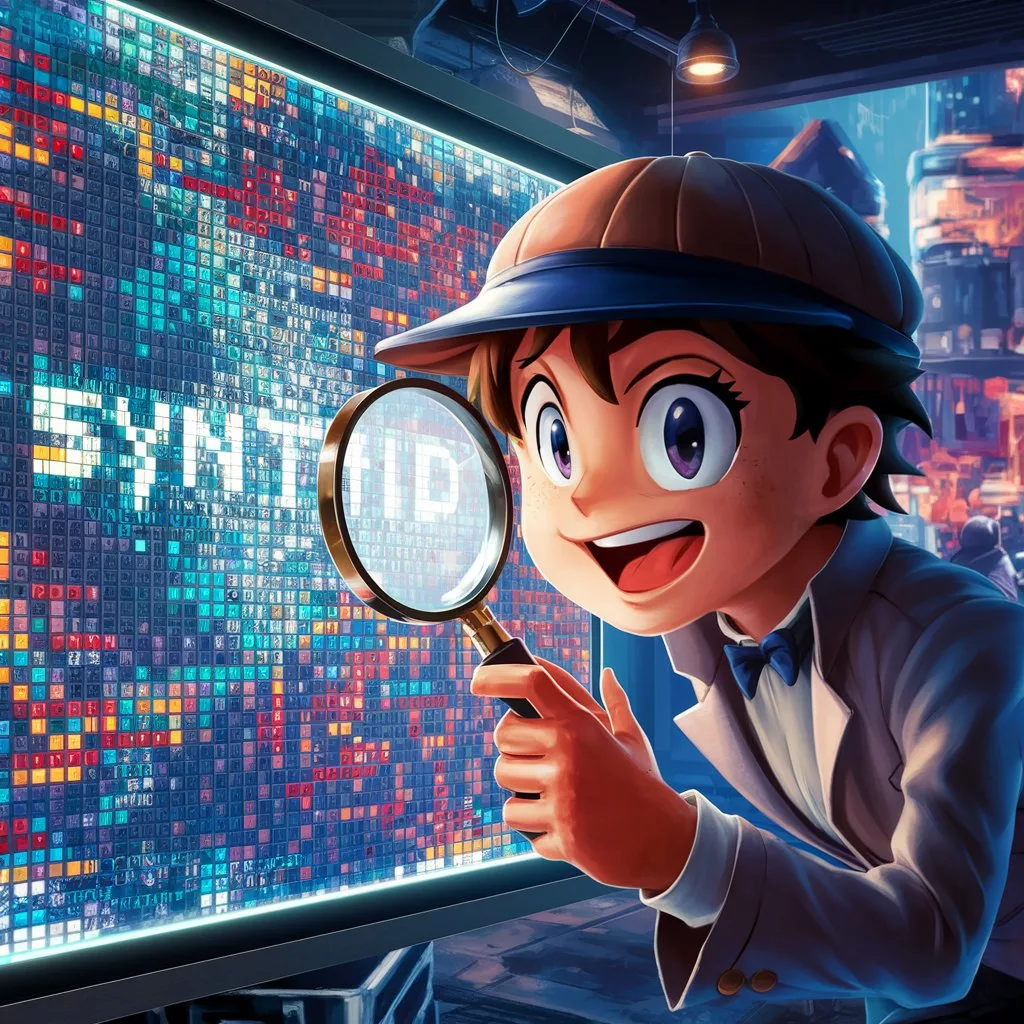
That is the backdrop that makes technologies like SynthID interesting.
We are moving into a world where synthetic text, images, audio, and video are no longer rare curiosities. They are becoming ordinary production tools. That can be creatively liberating. It can also be socially corrosive if provenance becomes impossible to trace.
What SynthID Is Actually Trying to Solve
At its core, SynthID is an attempt to answer a practical question: can AI-generated content carry an invisible marker that survives ordinary use well enough to be detected later?
That is a more grounded ambition than some of the surrounding rhetoric suggests.
SynthID, developed by Google DeepMind, is not a philosophical solution to truth on the internet. It is a technical attempt to preserve origin signals. In the case of images, that means embedding a watermark-like pattern into the generated output in a way that is meant to be imperceptible to people but still detectable by the right system.
That distinction matters. We are not talking about a big visible logo slapped across a picture. We are talking about a subtle marker designed to survive normal transformations like compression, resizing, or mild editing better than a superficial overlay would.
Why Provenance Suddenly Matters So Much
For years, most people could still rely on a rough instinct about what looked real, what looked edited, and what looked fabricated. That instinct was never perfect, but it held often enough to be socially useful.
AI erodes that comfort.
Once synthetic media becomes good enough, cheap enough, and fast enough, we lose the luxury of trusting intuition. That affects journalism, politics, creative work, reputational harm, and even mundane everyday communication. The problem is not just deepfakes or spectacular misinformation events. The problem is ambient doubt. Once people stop believing that origin can be meaningfully traced, bad actors no longer need to prove something is true. They only need to make everything feel debatable.
In that environment, provenance tools start to matter a great deal.
Why Watermarking Helps, and Why It Is Not Enough
This is where I think the conversation needs a little sobriety.
SynthID is useful precisely because it is modest. It gives us one more layer of evidence. It does not give us certainty. A detectable watermark can help platforms, publishers, and investigators identify at least some AI-generated outputs with more confidence than visual guesswork alone. That is valuable.
But a watermark is not a complete trust system.
It only helps when the content was generated by a tool that applies the watermark in the first place. It does not solve the existence of open models, adversarial edits, screen re-captures, or the arms race between detection and evasion. It also does not answer the deeper question of what to do with the information once it is found. A labeled fake can still spread. A labeled synthetic image can still manipulate. Provenance is necessary, but it does not automatically produce wisdom.
The Tension Between Attribution and Anonymity
The more we talk about origin, the more another tension emerges: not every form of traceability is morally simple.
There are good reasons to want stronger attribution for some kinds of AI-generated media. Creators deserve protection. Audiences deserve clarity. Platforms need tools to investigate abuse.
At the same time, not every corner of the internet should become a fully identity-bound environment. Anonymous speech has always mattered, especially for whistleblowers, dissidents, vulnerable communities, and people speaking under real pressure. So any future that treats “perfect traceability” as an unquestioned good is going to run into serious ethical trouble.
That is why I am more interested in provenance than universal identity. In many cases, what we need to know is not the full civil identity of the creator. We need to know whether the media is synthetic, what toolchain produced it, and whether that signal has been tampered with.
What the Future Internet Probably Needs
My guess is that the internet will need multiple overlapping trust layers rather than one silver bullet.
Watermarking systems like SynthID will likely be one part of that stack. Metadata standards, platform disclosure policies, forensic analysis tools, editorial norms, and plain old human skepticism will all have to do their part as well. No single technical mechanism is going to rescue us from the broader cultural consequences of cheap synthetic media.
Still, I would rather have imperfect provenance tools than none at all.
Because the alternative is an internet where authenticity becomes a purely rhetorical claim. And once we are there, every piece of media arrives with a silent question mark attached to it.
SynthID will not save the internet by itself. But it points in the direction of something the internet desperately needs: a way to preserve origin without pretending that trust can survive on vibes alone.
Recommended
Continue reading
Selected from shared topics, related tags, and the recent archive.