AI Agents & Memory Continuity v0.12.0
Active Development / Private Preview
Sila Arabic Kinship Knot

Sila (صِلَة)

Autonomous multi-agent alignment, governance, and session continuity substrate

Local-first continuity and governance substrate for autonomous AI coding agents. Consolidates multi-harness session memory across 10+ AI CLI tools into a queryable pure-Go SQLite store, compiles rulebooks, orchestrates pre-commit discipline gates, governs project skill exposure, reclaims disk bloat across 9 toolchains, and exposes a comprehensive 67-tool Model Context Protocol (MCP) server.

67 Native MCP Tools
10+ AI CLI Tools
Pure Go 1.26+ Zero CGO
100% Local SQLite FTS5
9 Ecosystems Cleaned
bash / zsh
$ curl -fsSL https://sila.jadmadi.net/sila/install.sh | sh

Verified multi-platform standalone binaries with SHA-256 integrity verification served via Cloudflare R2.

Master Whiteboard Visual Architecture
Sila Master Continuity Panorama Whiteboard Click to Expand Panorama

The panoramic ecosystem whiteboard capturing the full journey from the Amnesia Void across the Bridge of Sila into Grounded Collective Intelligence.

Why Sila Exists

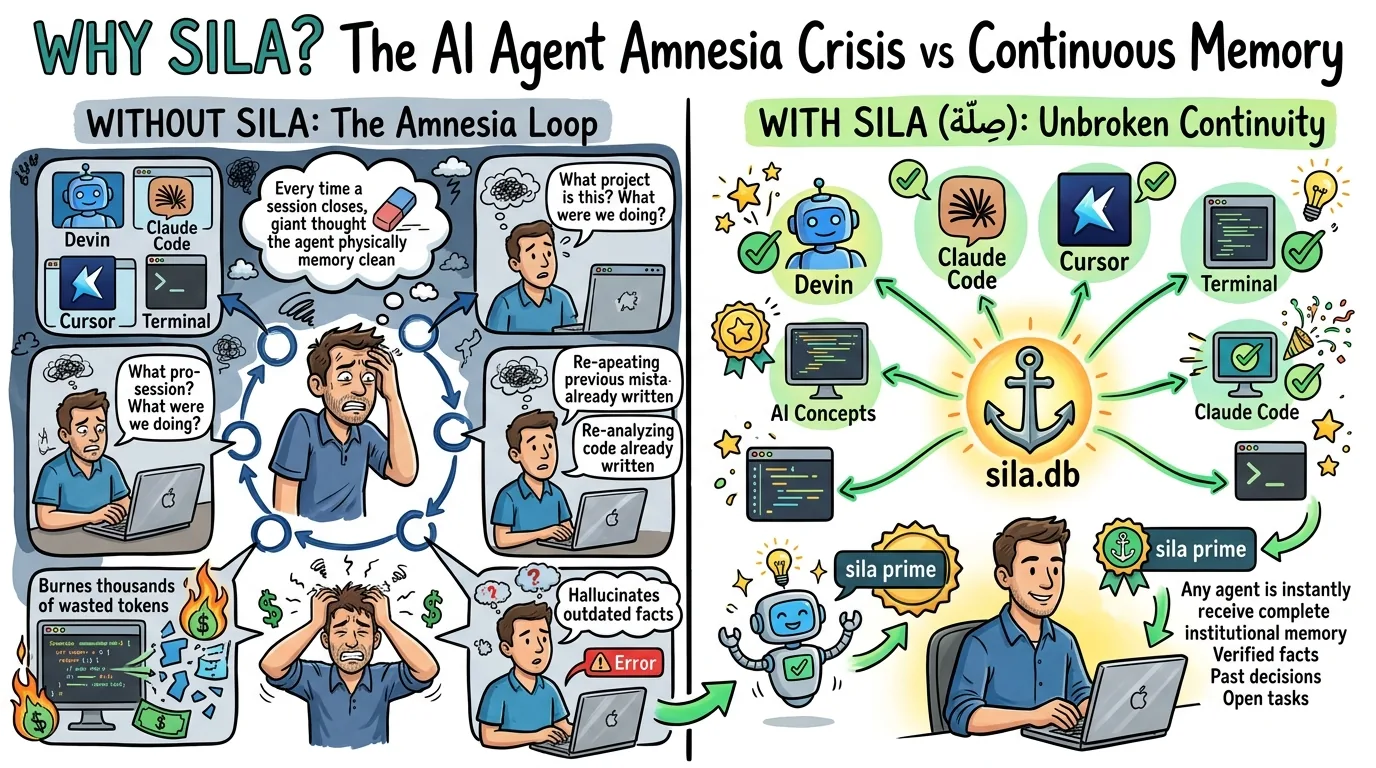
The Amnesia Loop vs Unbroken Continuity

Substrate Rationale
The Status Quo: The Amnesia Crisis

The Groundhog Day Trap

Autonomous coding agents operate in ephemeral, amnesiac silos: architectural decisions, debugging lessons, and institutional directives evaporate between sessions or when switching harnesses (Claude Code, OpenCode, Codex, Antigravity, Devin). Furthermore, uncontrolled global skill bloat injects tens of thousands of redundant tokens into agent prompts, triggering silent harness truncation and semantic confusion.

  • Context Erasure: When a session closes, hard-won debugging lessons, architectural rules, and user preferences vanish into thin air.
  • Token Incineration: Developers spend thousands of redundant tokens repeatedly explaining the same codebase invariants turn after turn.
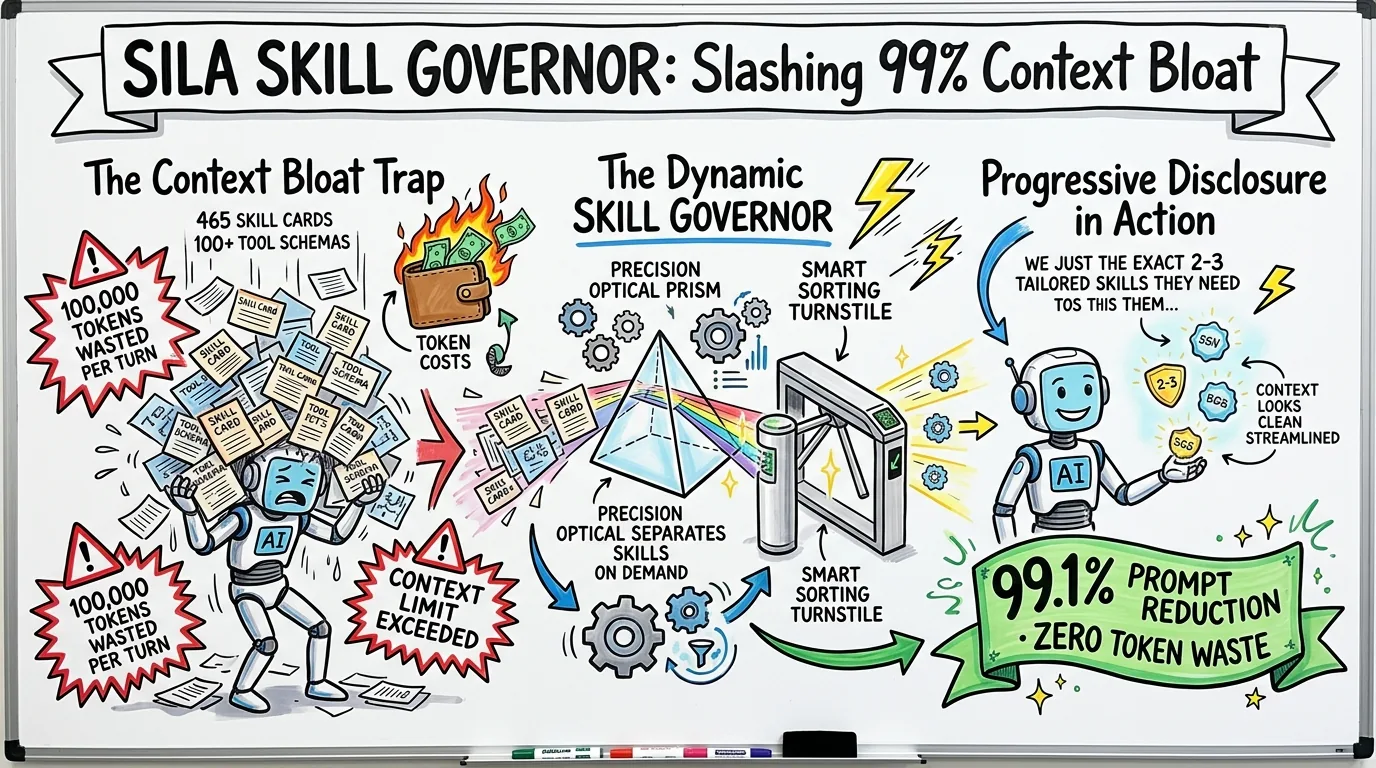
  • Skill Bloat: Injecting 50+ global skills consumes 30k to 100k tokens per query, causing silent harness truncation and model confusion.
The Solution: Grounded Memory

The Bridge of صِلَة

A local-first, zero-telemetry continuity engine and governance substrate that ingests multi-harness transcripts in milliseconds, compiles canonical rulebooks, coordinates epistemic roadmap goals and pre-commit discipline gates, enforces project-scoped skill governance with visual diff collision detection, reclaims developer disk space with a universal multi-toolchain cleaner, and equips agents with 67 native MCP tools and dynamic plugin bridging.

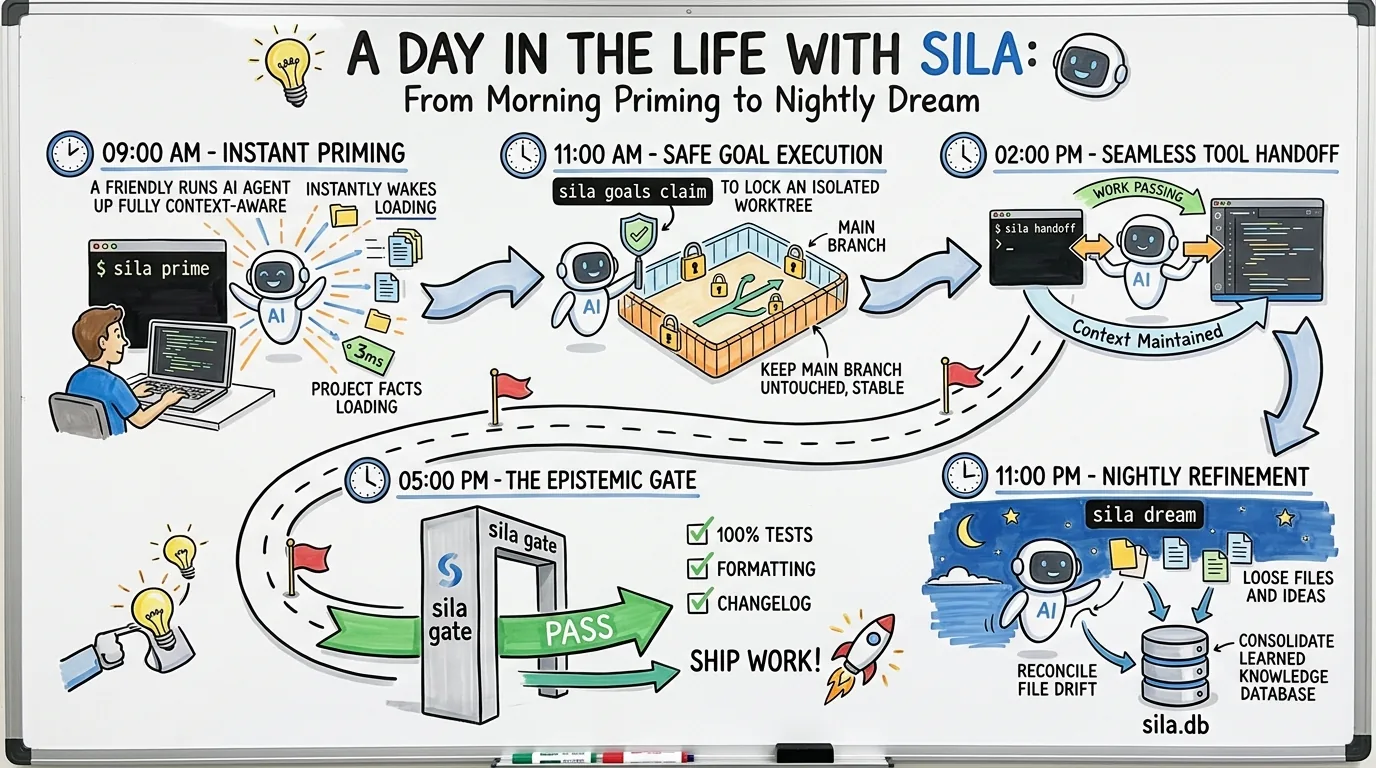
  • Instant Priming: sila prime retrieves distilled project invariants, active goals, and past lessons in under 3ms.
  • Progressive Skill Disclosure: Evaluates tech stacks to inject only the exact 2 to 3 micro-skills needed, slashing prompt bloat by 99.1%.
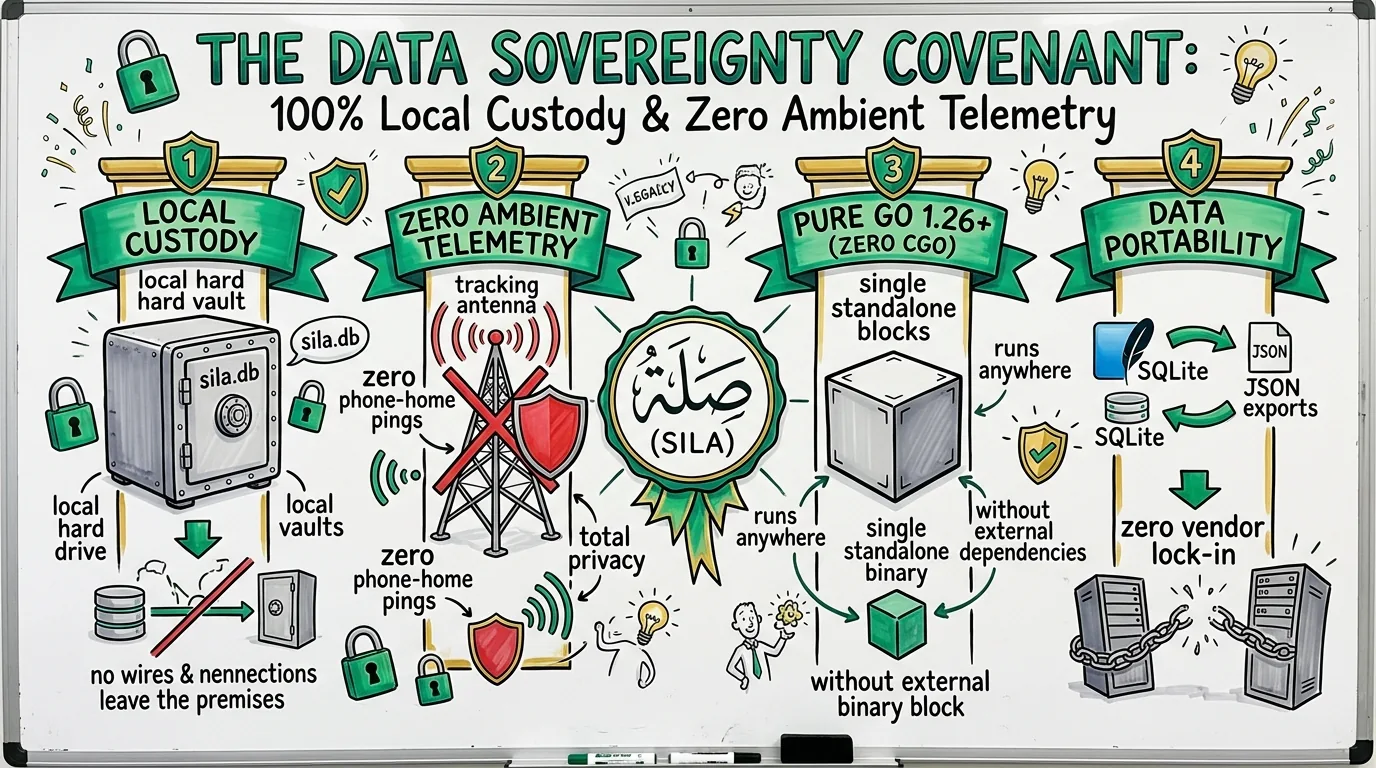
  • 100% Local Custody: Zero ambient telemetry, pure Go SQLite (FTS5), and pre-commit discipline gates keeping codebases pristine.

Visual Harvesting

Graphic Facilitation: The 8-Chapter Series

Interactive Visual Story

Complex distributed systems concepts are best digested visually. Sila architecture, daily developer workflows, and feature deep-dives are harvested across an 8-chapter graphic facilitation sketchnote series. Select any chapter below to explore the high-resolution board.

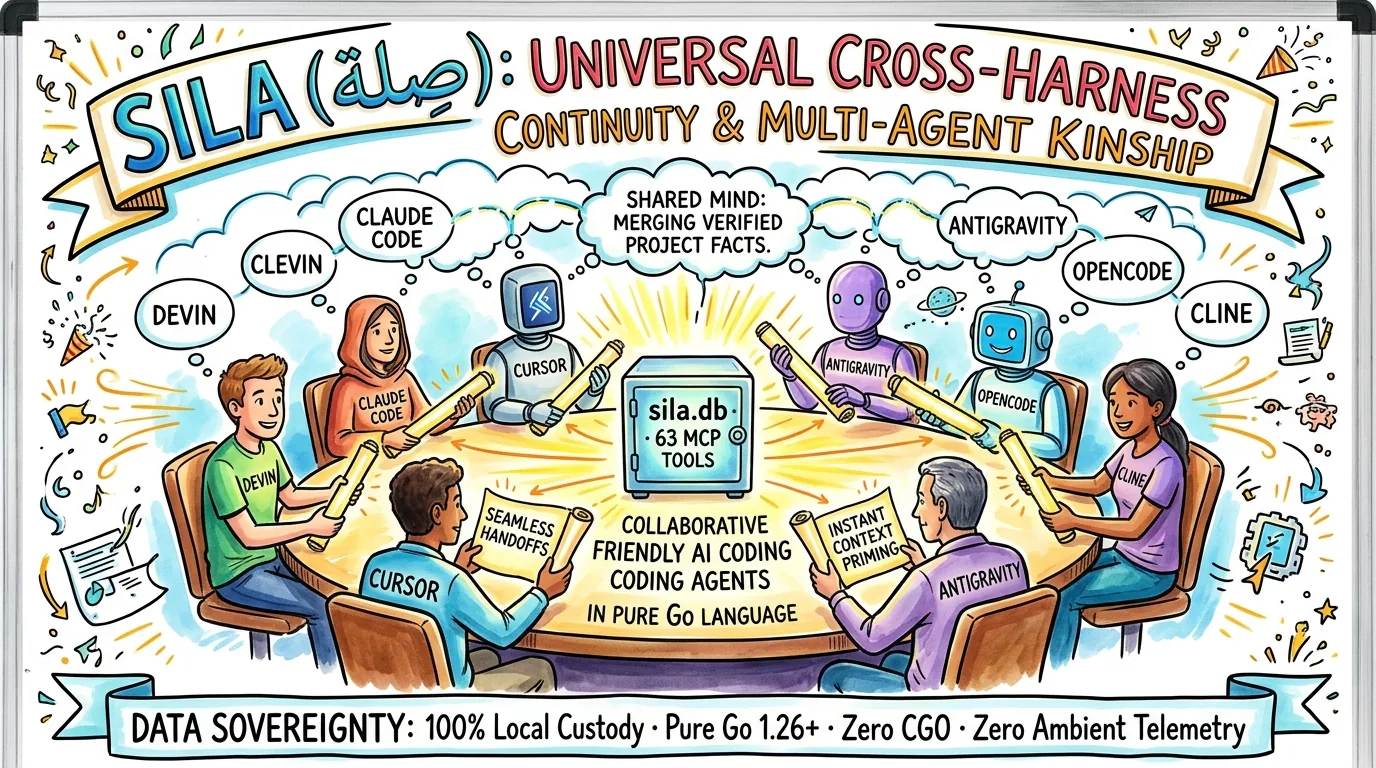
Executive Overview: Master Board
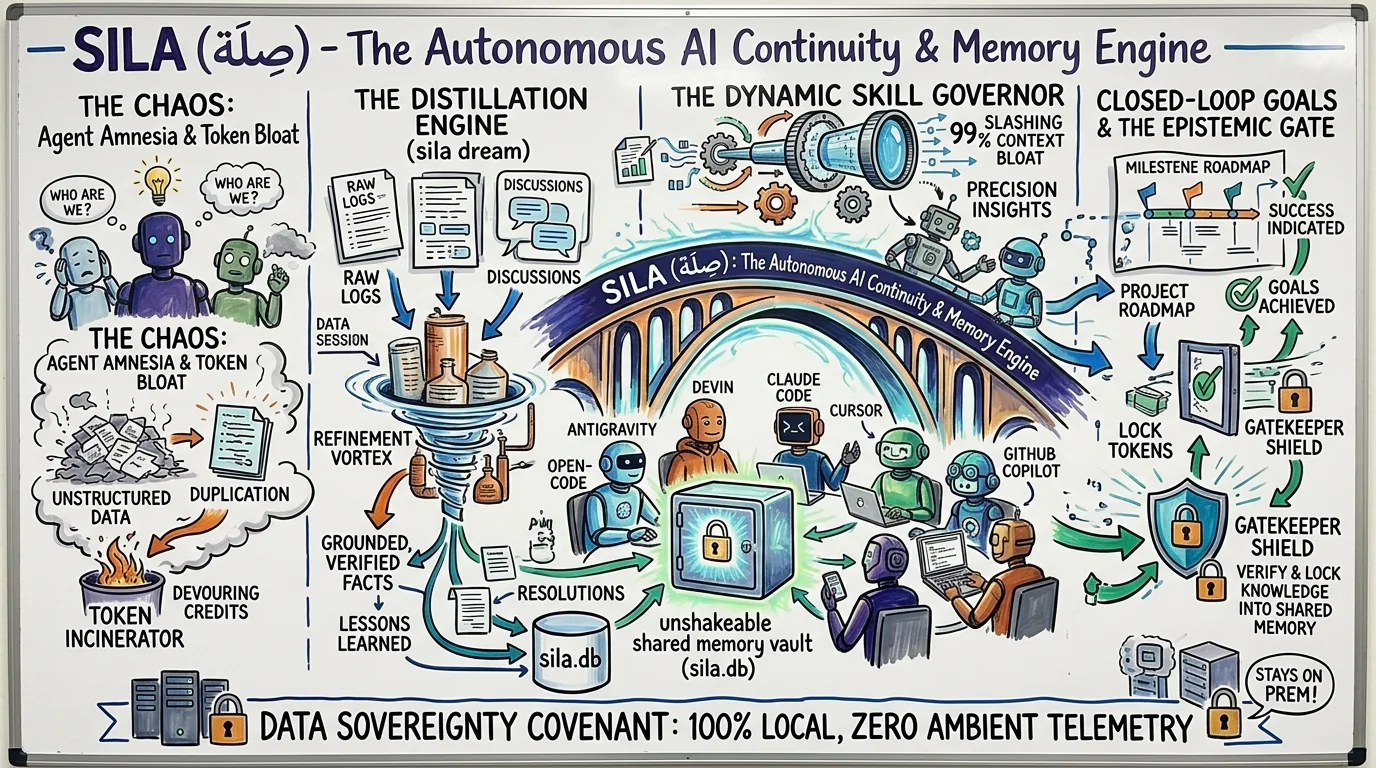
The Master Continuity Panorama

The Master Continuity Panorama

The panoramic ecosystem whiteboard capturing the full journey from the Amnesia Void across the Bridge of Sila into Grounded Collective Intelligence.

Panoramic SynthesisExecutive OverviewBridge of SilaShared Memory Vault

Key Visual Takeaways:

  • Depicts the transition from chaotic token incineration to unbroken memory continuity.
  • Shows how Devin, Claude Code, Cursor, Antigravity, and OpenCode coordinate around sila.db.
  • Anchors all workflows in the Data Sovereignty Covenant: 100% on-premise local custody.
Related CLI Commands:
1 of 9
Architecture

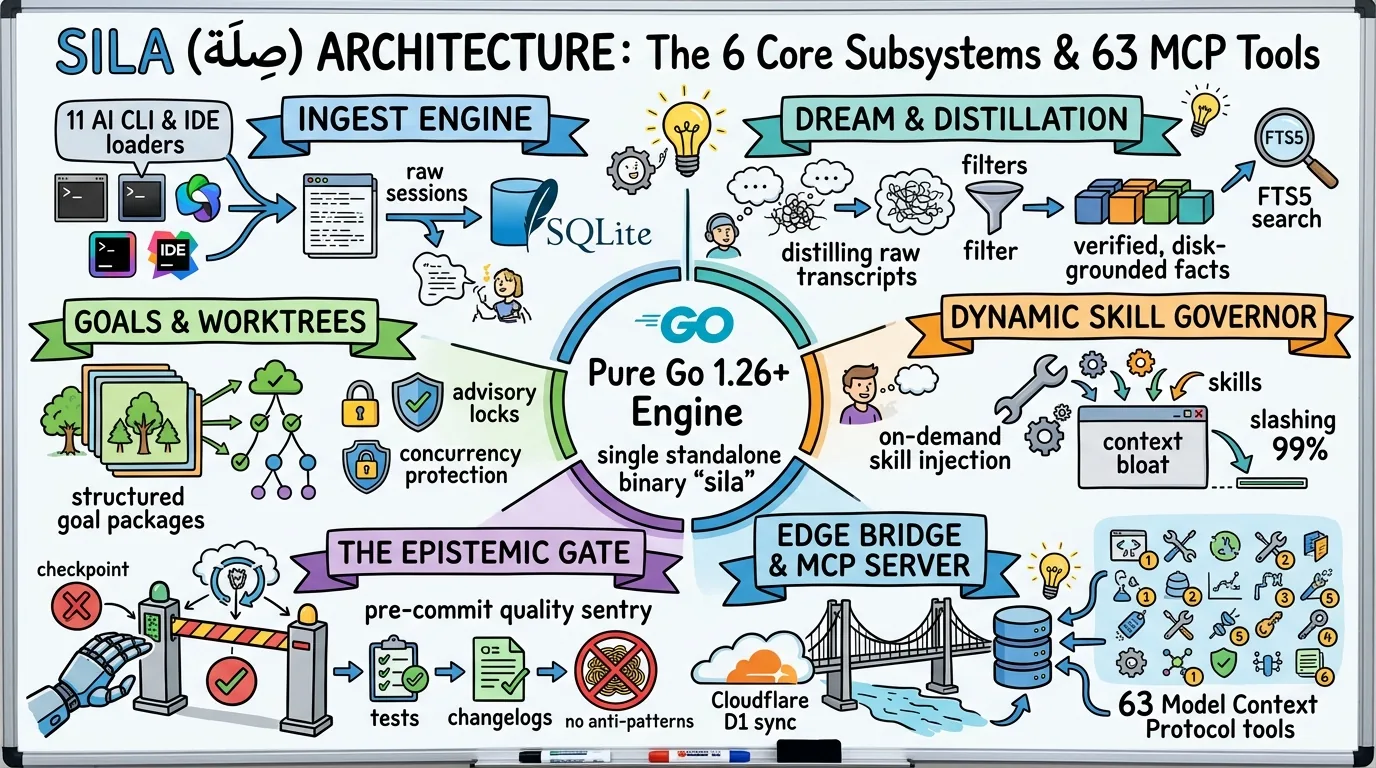
The 6 Modular Subsystems

Engine Rooms
10+ AI Loaders

Multi-Harness Ingest Engine

Non-destructive, read-only session parsers reading local JSONL and SQLite session logs in sub-10ms without modifying harness files.

  • Zero-lock read-only inspection (mode=ro)
  • Transcribes conversation turns, user intents, and tool outcomes
  • Unified message normalization across disparate formats
SQLite FTS5

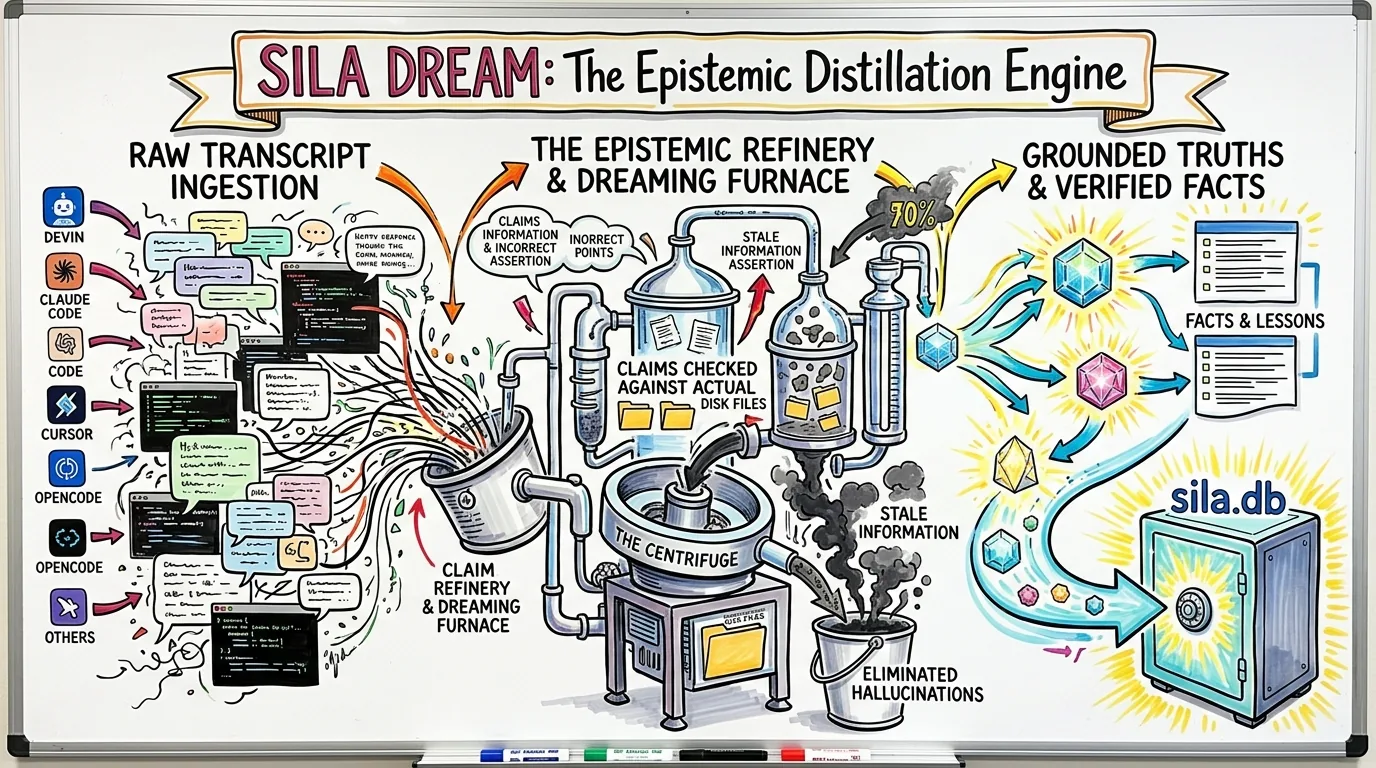
Dream & Epistemic Distillation

Background refinement furnace filtering chat chatter into physical disk-grounded facts, eliminating hallucinations.

  • Physical disk file verification against source code
  • Automated drift detection and lesson categorization
  • Sub-millisecond BM25 full-text indexing via FTS5
99.1% Bloat Slashed

Dynamic Skill Governor

Progressive disclosure lens replacing 100k token prompt floods with surgical 2-3 micro-skill injection on-demand.

  • Eliminates silent 50-skill prompt truncation traps
  • LCS visual diff collision diagnostics across duplicate tools
  • Sub-3ms on-demand retrieval via native MCP protocol
Closed-Loop Contracts

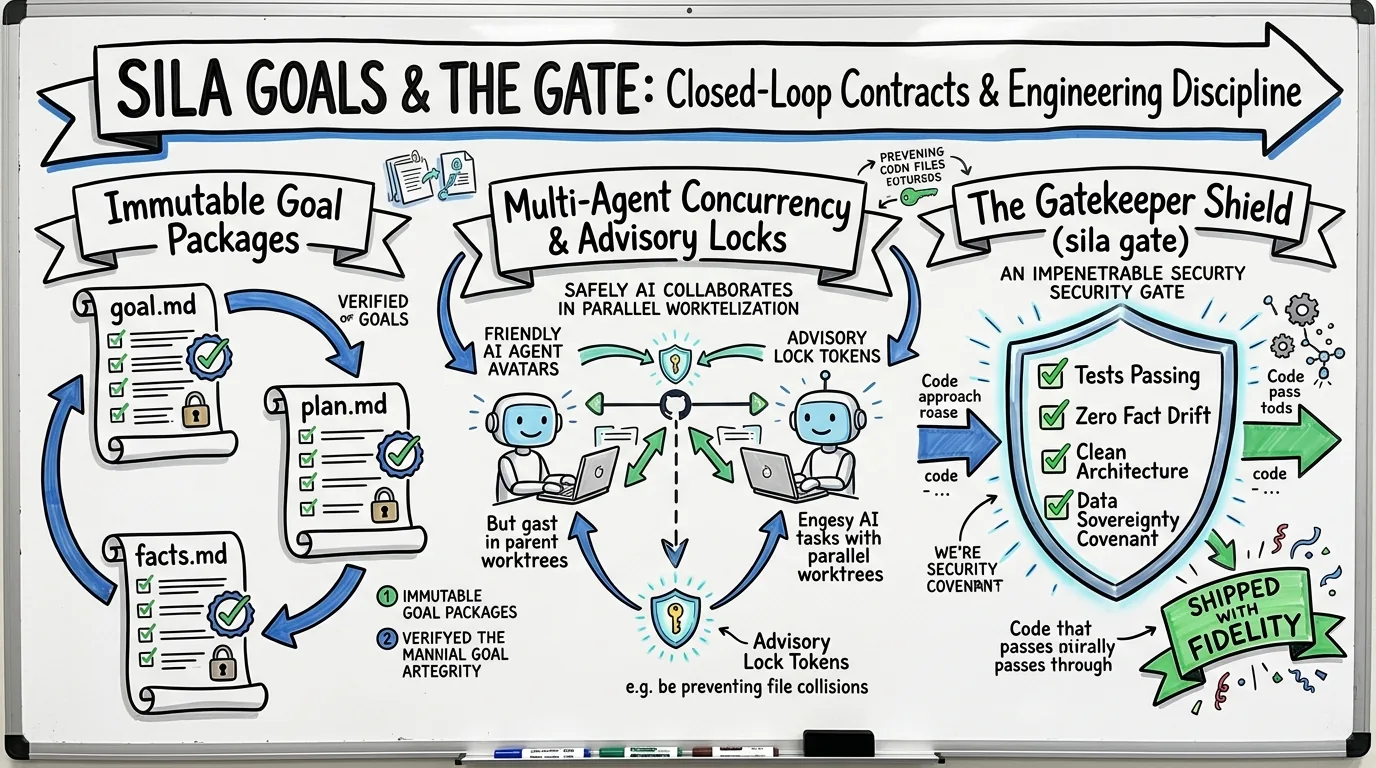
Epistemic 4-Pillars Stage-Gate

Structured roadmap goal packages bound by scope, plan, and invariant facts with advisory locks for multi-agent concurrency.

  • Immutable goal triad: goal.md, plan.md, facts.md
  • Atomic worktree lock leases preventing multi-agent collisions
  • Pre-commit gatekeeper auditing tests, formatting, and changelogs
9 Ecosystems

Universal Multi-Toolchain Cleaner

Reclaims tens of gigabytes of developer disk bloat across Go, Rust, pnpm, aube, npm, uv, bun, zig, and mise.

  • Strict path traversal verification and sandbox guards
  • Prunes orphaned MCP caches and temporary test isolates
  • Dry-run byte accounting before executing safe deletions
Plugin Spec v1.0.0

Standalone Go Plugins Subsystem

Dynamic MCP tool provider allowing developers to compile and link custom Go plugins directly into Sila.

  • Pure Go plugin lifecycle management (sila plugins)
  • Dynamic bridging into native MCP tool manifests
  • Zero external CGO dependencies

Cross-Harness Kinship

10+ Supported AI Environments

Zero Vendor Lock-in

Sila interacts with existing developer tools non-destructively using read-only loaders (mode=ro) and advisory file locks. Switch between proprietary frontier models and local open-source weights freely without abandoning project history.

Claude Code CLI / Agentic Shell
Cursor IDE / Composer
Devin Autonomous Agent
Antigravity / Agy Coding Agent
OpenCode TUI / CLI Agent
Codex CLI Agent
Cline VS Code Extension
Windsurf Cascade Agent
GitHub Copilot CLI / Extension
Roo Code Agentic Shell

Command-Line Interface

Common CLI Invocations

Verbs & Workflows
Command Category Operational Purpose Action
sila salam core Interactive status briefing and next step recommendations
sila prime memory Loads active project facts, open goals, and directives in <3ms
sila recall "<query>" memory Sub-millisecond BM25 retrieval over distilled memory and lessons
sila goals ready governance Inspects unblocked roadmap goals ready to claim
sila goals claim <slug> governance Acquires advisory lock on a goal package and target files
sila gate check governance Runs pre-commit discipline sentries (tests, format, changelog, rules)
sila handoff "<note>" core Creates cross-harness handoff checkpoint for another agent
sila clean --dry-run hygiene Scans 9 developer toolchains for safe disk bloat reclamation
sila doctor core Audits local environment health, SQLite mmap, and covenant compliance

Knowledge Base

Frequently Asked Questions

Technical Details
How do I install Sila on Linux, macOS, or Windows?

On Linux and macOS, run curl -fsSL https://sila.jadmadi.net/sila/install.sh | sh. On Windows (PowerShell), run irm https://sila.jadmadi.net/sila/install.ps1 | iex. Both installers verify SHA-256 binary checksums from Cloudflare R2 and place the single static binary into your local PATH.

What AI coding tools and harnesses does Sila support?

Sila includes non-destructive, read-only session loaders for 10+ AI CLI tools including Claude Code, OpenCode, Codex, Antigravity/Agy, Devin, Cursor, and git, exposing a 67-tool MCP server compatible with any standard MCP client.

What is the Graphic Facilitation series?

The Graphic Facilitation series is an 8-chapter visual harvesting story illustrating the core architecture, workflow, and feature deep-dives of Sila, from the initial AI agent amnesia crisis to the multi-agent shared memory vault and Data Sovereignty Covenant.

What is the Universal Multi-Toolchain Clean Engine (sila clean)?

Sila includes a built-in clean command that safely scans and reclaims gigabytes of disk bloat across 9 developer ecosystems: Go, Rust/Cargo, pnpm, aube, npm, uv/pip, bun, zig, and mise, featuring strict path traversal guards and MCP cache pruning.

Where is my session data stored and does Sila phone home?

Sila is strictly local-first and zero-telemetry. Under the Digital Data Sovereignty Covenant, all session memory, architectural directives, and lessons are stored in an open relational pure-Go SQLite database directly on your machine.

How does the Sila Go Plugins subsystem work?

Sila supports standalone Go plugins that compile against the Sila Plugin Standard Specification v1.0.0. Plugins can be initialized, installed, linked, and dynamically bridged into native MCP tools via sila plugins and internal/mcp/plugins_provider.go.

How do I request early access or a pilot integration?

Reach out directly to Jad Madi (@jadmadi on X) or submit an inquiry via the contact form on jadmadi.net for integration reviews and enterprise pilots.

Ready for Multi-Agent Continuity?

Explore the official documentation at sila.jadmadi.net or view clean raw Markdown for your autonomous agent via /project/sila.md. For integration pilots and architecture discussions, reach out directly to @jadmadi on X.

Command copied to clipboard